Human Physiology for NEET: Why NTA Loves NCERT Lines (and Which Ones)
Human Physiology is 5 chapters of Class 11 NCERT Biology: Digestion, Breathing, Body Fluids (Circulation), Excretion, and Locomotion. Plus the Class 12 chapters on Neural Control and Chemical Coordination. That's about 7 chapters covering how the human body works.
And here's the key insight: NTA loves these chapters. The questions are almost always direct NCERT lines, often with the exact wording. If you know NCERT cold, you can score 40-50 marks from Physiology alone.
Let me walk through the high-yield sections and the specific NCERT lines that show up repeatedly.
Why Physiology Is High-Yield
Physiology accounts for roughly 25-30 questions in NEET (out of 90 Biology questions). That's 100-120 marks. It's the largest single chunk of Biology after Genetics and Evolution.
And the questions are predictable. Unlike Genetics (which can be application-based) or Ecology (which can be obscure), Physiology questions are almost always direct recall from NCERT. The line "The Q10 value is 2 or 3" becomes the question "What is the Q10 value?" Answer: 2 or 3.
This means Physiology is the most "NCERT-dependent" section of NEET Biology. If you haven't read NCERT properly, you lose easy marks. If you have, you bank them.
The High-Yield Topics
Let me break down the specific topics and NCERT lines that appear repeatedly:
Digestion and Absorption
Must-know NCERT lines:
- The four layers of the alimentary canal (serosa, muscularis, submucosa, mucosa) — know them in order from outer to inner
- Dental formula (adult: 2103/2103, child: 2102/2102)
- Enzymes of the digestive system and their substrates/products — a frequent match-the-following topic
- The absorption sites: jejunum-ileum for most nutrients, large intestine for water and some minerals
- The function of the liver (bile production, not digestion enzymes — bile emulsifies fats)
- Disorders: jaundice, vomiting, diarrhoea, constipation, indigestion — brief points but testable
Breathing and Exchange of Gases
Must-know NCERT lines:
- The respiratory pathway and the volumes (tidal, inspiratory reserve, expiratory reserve, residual) — know the values approximately
- Inspiratory capacity = Tidal volume + Inspiratory reserve volume
- Functional residual capacity = Expiratory reserve volume + Residual volume
- Vital capacity = Tidal + Inspiratory reserve + Expiratory reserve
- Total lung capacity = Vital capacity + Residual volume
- Transport of oxygen: 97% as oxyhaemoglobin, 3% dissolved in plasma
- Transport of CO2: 70% as bicarbonate, 23% as carbaminohaemoglobin, 7% dissolved
- The oxygen dissociation curve and its sigmoid shape
- Bohr effect (pH and pCO2 effects on oxygen affinity)
Body Fluids and Circulation
Must-know NCERT lines:
- Blood composition: plasma (55%) and formed elements (45%)
- Plasma proteins: fibrinogen, globulins, albumins — know their functions
- RBC count: ~5 million/mm³ (male), ~4.5 million/mm³ (female)
- WBC count: ~7000/mm³
- ABO blood grouping: A, B, AB, O — know the antigens and antibodies
- Rh factor and erythroblastosis foetalis (when Rh- mother has Rh+ baby)
- The cardiac cycle phases (atrial systole, ventricular systole, cardiac diastole) — know durations
- Heart sounds: "lub" (atrioventricular valves close) and "dub" (semilunar valves close)
- ECG components: P wave (atrial depolarisation), QRS (ventricular depolarisation), T wave (ventricular repolarisation)
Excretory Products and Elimination
Must-know NCERT lines:
- The nephron structure: Bowman's capsule, PCT, Loop of Henle, DCT, collecting duct
- Cortical nephrons (85%) vs juxtamedullary nephrons (15%)
- The three steps of urine formation: glomerular filtration, reabsorption, secretion
- GFR: ~125 mL/min (180 L/day filtered, 1.5 L/day excreted)
- The counter-current mechanism in the Loop of Henle and vasa recta
- Regulation of kidney function: ADH (water reabsorption), Aldosterone (Na+ reabsorption), ANF (dilates blood vessels)
- Disorders: uremia, renal failure, renal calculi, glomerulonephritis
Locomotion and Movement
Must-know NCERT lines:
- Types of movement: amoeboid, ciliary, muscular
- Types of muscles: skeletal, smooth, cardiac — know characteristics of each
- The structure of a sarcomere: Z-line, A-band, I-band, H-zone
- The sliding filament theory of muscle contraction
- The role of calcium in muscle contraction (troponin, myosin, actin interactions)
- Red fibres vs white fibres (aerobic vs anaerobic, myoglobin content)
- Disorders: myasthenia gravis, tetany, muscular dystrophy
Neural Control and Coordination (Class 12)
Must-know NCERT lines:
- The neuron structure: dendrites, cell body, axon, synaptic knobs
- Resting membrane potential (-70 mV) and action potential (+30 to +40 mV)
- The refractory periods (absolute and relative)
- Synaptic transmission: chemical (neurotransmitter) vs electrical
- The parts of the brain: forebrain (cerebrum, thalamus, hypothalamus), midbrain, hindbrain (pons, cerebellum, medulla)
- The corpus callosum connecting the two hemispheres
- Sensory receptors and their locations (organ of Corti for hearing, retina for vision, etc.)
- The eye: cornea, lens, retina, rods (low light), cones (colour vision)
- The ear: outer (pinna, ear canal), middle (malleus, incus, stapes), inner (cochlea, vestibular apparatus)
Chemical Coordination and Integration (Class 12)
Must-know NCERT lines:
- The endocrine glands: hypothalamus, pituitary, pineal, thyroid, parathyroid, thymus, adrenal, pancreas, testis, ovary
- Pituitary hormones: GH, PRL, TSH, ACTH, LH, FSH, OXT, ADH (MSH in intermediate lobe)
- The hypothalamus-pituitary axis
- Thyroid hormones: T3, T4, and calcitonin
- Parathyroid hormone (PTH) — increases blood calcium
- Pancreas: insulin (β cells, lowers blood glucose), glucagon (α cells, raises blood glucose)
- Adrenal: cortex (glucocorticoids, mineralocorticoids) and medulla (epinephrine, norepinephrine)
- Disorders: diabetes mellitus, diabetes insipidus, Addison's disease, Cushing's syndrome, goitre
The Diagrams That Matter
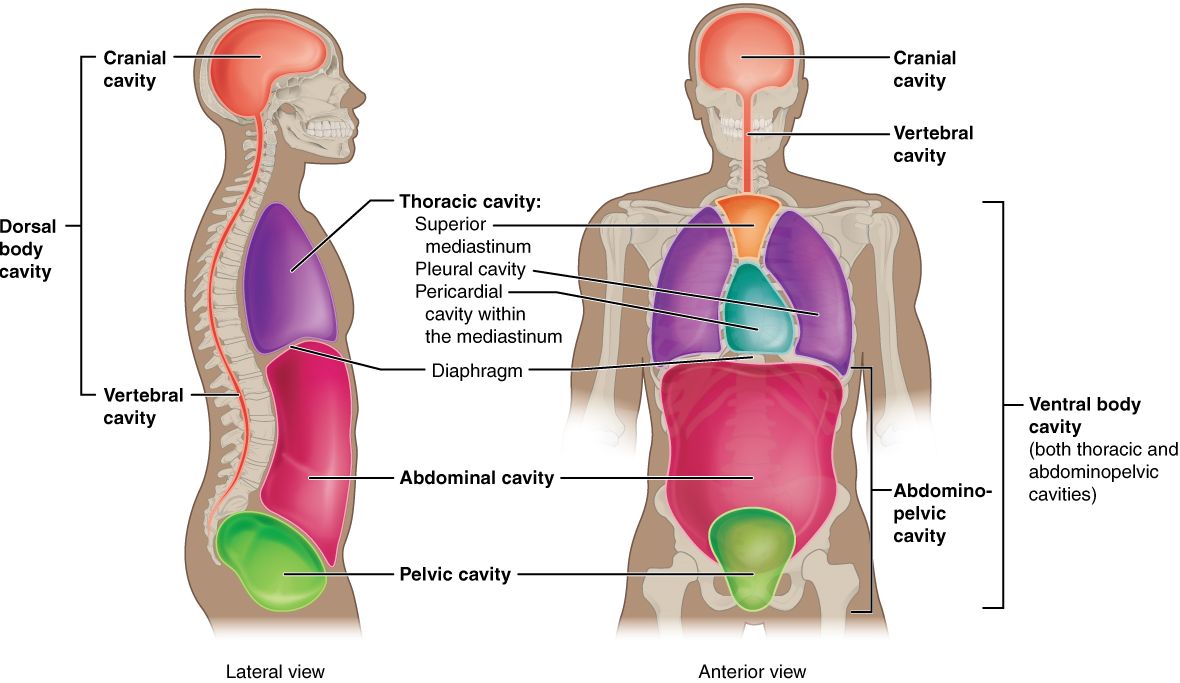
Physiology has many diagrams that show up as questions. You must know these:
- The digestive system (label all organs)
- The respiratory system (label the path of air)
- The heart (four chambers, valves, major vessels)
- The nephron (all parts from Bowman's capsule to collecting duct)
- The sarcomere structure
- The neuron structure
- The brain (sagittal section)
- The eye (horizontal section)
- The ear (cross-section)
For each diagram, be able to label every part from memory and explain its function. NEET has "identify the labelled structure" questions frequently.
The Strategy
For Physiology specifically, here's the optimal approach:
Step 1: Read NCERT actively.
Mark the lines likely to be tested — specific numbers, definitions, lists (like the layers of the alimentary canal). Read every diagram and know the labels.
Step 2: Make a summary sheet.
For each chapter, write the key formulas, the key values, the key lists. This becomes your revision tool.
Step 3: Solve previous year questions.
NEET Physiology questions from 2015-2025 are extremely repetitive. Once you've solved 100, you'll recognise every pattern.
Step 4: Test yourself on the diagrams.
Cover the labels and try to identify each part. Do this until you can do it perfectly for every diagram.
Step 5: Focus on the "match the following" topics.
Enzyme-substrate, hormone-source, disorder-symptom — these are frequent match-the-following questions. Make a table for each.
The Realistic Target
If you've done NCERT Physiology thoroughly (3 reads, all diagrams, all lines marked, all previous year questions solved), you can target 90-100% of the Physiology questions correct. That's about 80-100 marks from Physiology alone.
Combined with strong Botany (Ecology, Genetics, Plant Physiology), you can build a Biology score of 320-340 — the range needed for a top NEET rank.
Final Thoughts
Physiology is the most "studiable" part of NEET Biology. Unlike Genetics (which can be tricky) or Ecology (which can be obscure), Physiology is straightforward NCERT recall. There's no "aha moment" needed — just thorough reading and revision.
Take it seriously. Read NCERT properly. Know the lines. Know the diagrams. The marks are there for the taking — you just have to do the work.
Ready to put these strategies to work?
Examtro offers 30+ years of NEET and JEE previous year questions with instant evaluation and detailed analytics. Practice the way the real exam tests you.
Start practicing free →