Modern Physics in JEE: The Highest-ROI Chapter in the Syllabus
If there's one chapter that every JEE topper mentions as "must-do, easy marks," it's Modern Physics. Not because it's exciting (though it is), but because it offers the highest return on investment in the entire Physics syllabus. Let me explain why, and how to extract maximum value from it.
What "ROI" Means Here
ROI (Return on Investment) in JEE prep terms = marks scored per hour of study. If a chapter gives you 8 marks for 5 hours of study, that's high ROI. If it gives you 2 marks for 20 hours of study, that's low ROI.
Modern Physics (which includes the dual nature of matter and radiation, atomic structure, nuclear physics, and semiconductor electronics in JEE Main) typically accounts for 8-12 marks in JEE Main (out of 100) and 6-10 marks in JEE Advanced (out of 180). For a chapter that takes maybe 15-20 hours to master, that's excellent ROI.
Compare with, say, Rotational Motion — which takes 30-40 hours to master and gives 8-12 marks. Same marks, double the effort. Or Thermodynamics — 10-15 hours for 4-6 marks. Lower ROI.
Why Modern Physics Is High-ROI
1. The formulas are simple and few.
The core formulas in Modern Physics are:
- E = hf (energy of a photon)
- p = h/λ (momentum of a photon)
- λ = h/p (de Broglie wavelength)
- E = mc² (mass-energy equivalence)
- KEmax = hf - Φ (photoelectric equation)
- eVs = KEmax (stopping potential)
- Bohr model: rn = n²·a0, En = -13.6/n² eV (for hydrogen)
- Nuclear: N = N0e^(-λt), t1/2 = 0.693/λ
That's about 8-10 formulas. Compare with Mechanics, which has 30+ formulas across multiple subtopics. Fewer formulas = easier to memorise and apply.
2. The questions are largely formula-based.
Most Modern Physics questions are "identify the formula, plug in the values." Unlike Mechanics (where setup interpretation is the hard part), Modern Physics questions are usually direct. "A photon has wavelength 500 nm. Find its energy." Apply E = hc/λ, plug in, done.
3. The syllabus is compact.
Modern Physics covers maybe 4-5 chapters (Dual Nature, Atomic Structure, Nuclear Physics, Semiconductors for Main, X-rays sometimes). Compare with Mechanics (8-9 chapters) or Electricity (5-6 chapters). Less ground to cover.
4. The concepts are intuitive.
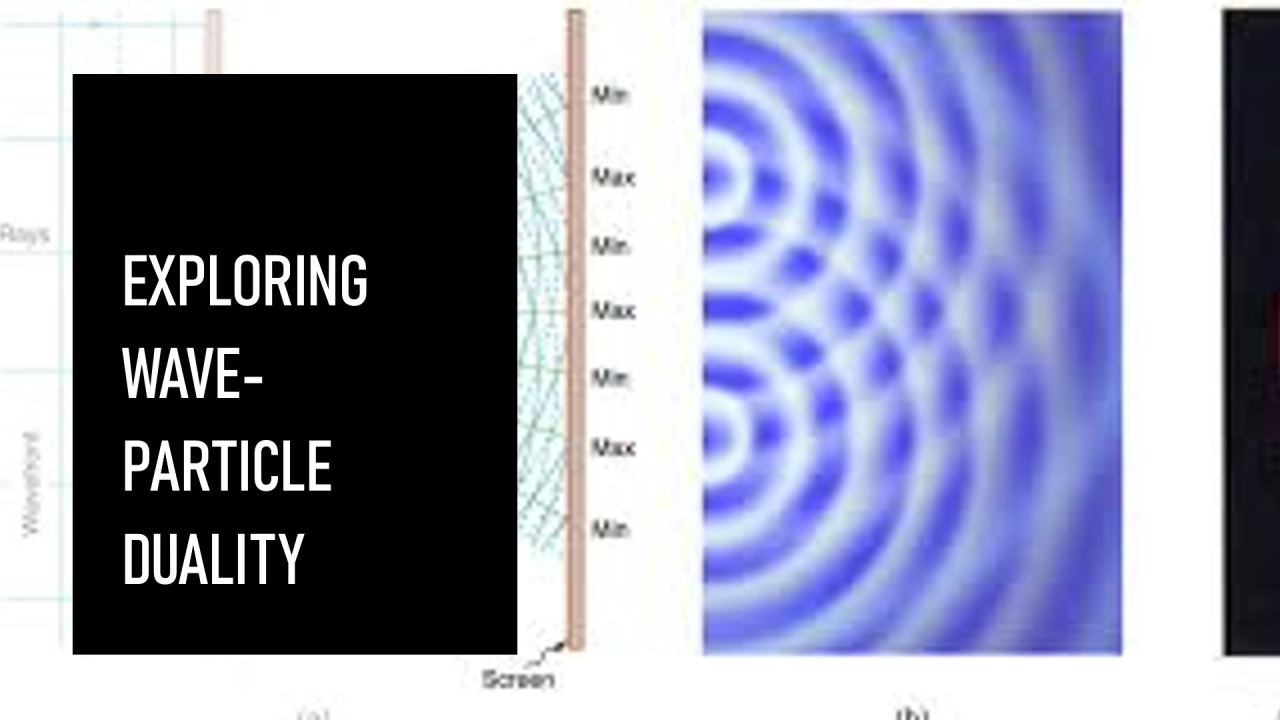
Quantum mechanics sounds intimidating, but the basics are surprisingly accessible. "Light has particle-like properties" and "matter has wave-like properties" are the core ideas. The rest is application of formulas.
The Subtopics That Matter
Not all of Modern Physics is equally important. Here's the breakdown:
High-yield (must-master):
- Photoelectric effect — appears almost every year in both Main and Advanced. Know the equation, know the graph (current vs intensity, KE vs frequency), know the threshold frequency concept.
- De Broglie wavelength — simple formula (λ = h/p), but questions can combine it with kinetic energy (λ = h/sqrt(2mKE)) or momentum. Very testable.
- Bohr model of hydrogen — radius, energy, velocity formulas. Know the n² relationships. Often combined with spectral lines (Balmer, Lyman, Paschen series).
- Nuclear physics — half-life, decay constant, mass defect, binding energy per nucleon. The binding energy curve is important.
Medium-yield:
- X-rays (characteristic X-rays, Mosley's law) — more relevant for JEE Advanced
- Semiconductors (JEE Main only, not in Advanced) — p-n junction, diodes, transistors. Factual, easy marks.
Lower-yield:
- Matter waves in detail — Heisenberg uncertainty (Advanced level, rare)
- Nuclear fission/fusion details — qualitative questions, occasional
Common Traps in Modern Physics
Even though Modern Physics is high-ROI, there are specific traps students fall into:
1. Unit confusion in photon energy.
E = hc/λ. If λ is in nm, E comes out in eV (approximately 1240/λ in nm). If λ is in metres, E comes out in joules. Students mix up units and get wrong answers by a factor of 10^19.
2. Forgetting that KE_max = hf - Φ, not KE = hf.
In the photoelectric effect, the photon energy goes into overcoming the work function (Φ) and the rest becomes kinetic energy. Students sometimes use hf as the kinetic energy directly.
3. Confusing excitation and ionisation energy.
Excitation: moving from n=1 to n=2 (requires 10.2 eV for hydrogen). Ionisation: removing the electron entirely (requires 13.6 eV from ground state). These are different.
4. Misapplying the binding energy curve.
The binding energy per nucleon peaks at iron (Fe-56, about 8.8 MeV/nucleon). Fission releases energy for heavy nuclei (splitting moves toward the peak). Fusion releases energy for light nuclei (combining moves toward the peak). Students sometimes get the direction wrong.
5. Stopping potential vs kinetic energy.
eVs = KEmax. If the question gives stopping potential (Vs), the KE_max is eVs (in eV if Vs is in volts). Students sometimes forget the electron charge factor.
How to Master Modern Physics Quickly
If you're short on time and want to maximise Modern Physics marks, here's the efficient path:
Step 1: Read NCERT (Class 12, chapters 8 and 11-12).
NCERT covers all the concepts. Read it twice — once for understanding, once to mark the key formulas and relationships. Don't skip the diagrams (Bohr model, binding energy curve, etc.).
Step 2: Make a one-page formula sheet.
Write every formula you need on one page. Include the relationships (e.g., "if wavelength doubles, energy halves"). This is your reference for solving.
Step 3: Solve 50-60 previous year questions.
Modern Physics questions from JEE Main 2015-2025 are remarkably consistent. Once you've solved 50, you'll recognise the patterns instantly. The same question types recur year after year.
Step 4: For JEE Advanced, add HC Verma and DC Pandey.
Advanced questions are slightly more complex — they combine concepts or add twists. HC Verma's treatment is excellent for building the intuition needed for these.
Step 5: Revise the formula sheet weekly.
Modern Physics is formula-heavy. If you don't use the formulas regularly, you forget them. Revise your sheet once a week to keep it fresh.
The Semiconductor Exception
One part of Modern Physics is slightly different: Semiconductors (JEE Main only, not in Advanced). This chapter is more factual than formula-based — you need to know:
- p-type and n-type semiconductors (doping)
- p-n junction (depletion region, barrier potential)
- Diode characteristics (forward bias, reverse bias)
- Zener diode (voltage regulator)
- Transistor basics (CB, CE, CC configurations)
- Logic gates (AND, OR, NOT, NAND, NOR, XOR)
These are "memorise once, score marks" type topics. Read NCERT carefully, make notes, and solve previous year questions. 4-6 marks for maybe 4-5 hours of work.
The Time Investment
Here's a realistic time budget for Modern Physics:
- First-time learning (Class 12): 25-30 hours total (including problem solving)
- Revision (for droppers): 10-15 hours (re-read formulas, solve 30-40 problems)
- Last-month revision: 3-5 hours (formula sheet + 15-20 quick problems)
For 8-12 marks in Main and 6-10 in Advanced, this is excellent ROI. There's no other chapter in Physics where 25-30 hours reliably gets you 8+ marks.
Final Thoughts
If you're a student short on time (most students are, by the last few months), Modern Physics should be a priority. The marks-to-effort ratio is unbeatable.
But even if you're not short on time, don't skip Modern Physics. It's the one chapter where you can reliably expect to score full marks with moderate effort. That's rare in JEE Physics, where most chapters have ceiling effects (your 10th hour of study doesn't add as much as your 1st).
Master it. Score the marks. Move on to the harder chapters with the confidence of knowing you've banked easy points.
Ready to put these strategies to work?
Examtro offers 30+ years of NEET and JEE previous year questions with instant evaluation and detailed analytics. Practice the way the real exam tests you.
Start practicing free →